Bid, ask, and spread
Welcome to Order Filler. In Runner you learned what a futures contract is, and in Clerk you learned to read a chart. Now you learn how a trade actually happens. It starts with a surprise for most beginners: at any moment there is not one price, there are two.
Who is on the other side
When you buy one MES contract, somebody sells it to you. When you sell, somebody buys. CME describes the exchange as the place where buy and sell orders are received and matched, and that matching is what creates “the market.” You never pick the person on the other side. The exchange matches your order with someone else’s, and neither of you knows who the other is.
That other trader has their own reasons. They might be a hedger or another speculator (you met both in Runner Lesson 2). What matters here is simple: a trade only happens when a buyer and a seller agree on a price.
The bid
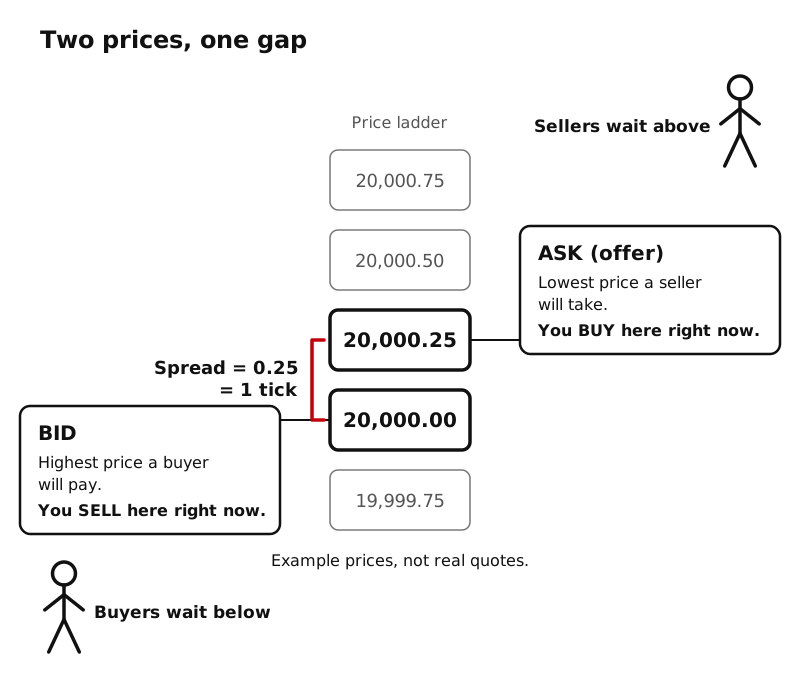
The bid is an offer to buy. The CFTC glossary describes it as an offer to buy a specific quantity at a stated price. On your screen, “the bid” usually means the highest price any buyer is currently willing to pay.
If you want to sell right now, the best you can do is sell to the highest bid.
The ask (or offer)
The ask is the other side. The CFTC calls an offer a willingness to sell at a given price, and notes the price of the offer can be called the ask. “Ask” and “offer” mean the same thing. On your screen, “the ask” usually means the lowest price any seller is currently willing to accept.
If you want to buy right now, the best you can do is buy at the lowest ask.
The spread
The ask is always above the bid. If they were equal, a buyer and seller would agree and a trade would happen at once. The gap between them is the bid-ask spread. CME’s liquidity tool measures it in ticks: the difference between what a buyer is willing to pay and what a seller is willing to accept.
Here is an example with made-up prices (example prices, not real quotes) on MNQ:
- Bid: 20,000.00
- Ask: 20,000.25
- Spread: 0.25, which is 1 tick
You learned in Runner Lesson 6 that one tick on MNQ is worth $0.50. So if you bought at the ask and immediately sold at the bid, you would lose 1 tick, $0.50 per contract, even though “the price” did not move. That is the cost of crossing the spread.
Why the spread matters
A narrow spread means buying and selling costs little extra. CME notes that in a liquid market with narrow bid-ask spreads, such as the E-mini S&P 500, a trader generally gets filled quickly at the price shown on the platform. In a market with a wide spread and low volume, a buyer may pay more and a seller may receive less than they expected.
The CFTC defines a liquid market as one where buying and selling can happen with minimal effect on price. Liquidity and the spread go together: when lots of traders are bidding and offering, the spread tends to stay tight. When they step away, it can widen.
The last price is not your price
Your chart shows the last traded price, the price of the most recent trade. That is history. The price you can trade at right now is the bid (if you sell) or the ask (if you buy). Beginners who only look at the last price are often surprised by where they get filled. Watch the bid and the ask.
Key ideas
- Every trade has a buyer and a seller, matched by the exchange.
- The bid is the highest price a buyer will pay. You sell to the bid right now.
- The ask (or offer) is the lowest price a seller will take. You buy at the ask right now.
- The spread is the gap between them, measured in ticks. Crossing it costs you, even if price does not move.
- The last traded price on a chart is not the price you will get. Look at the bid and ask.